How Wearable GPS Tech Is Changing Golf Training
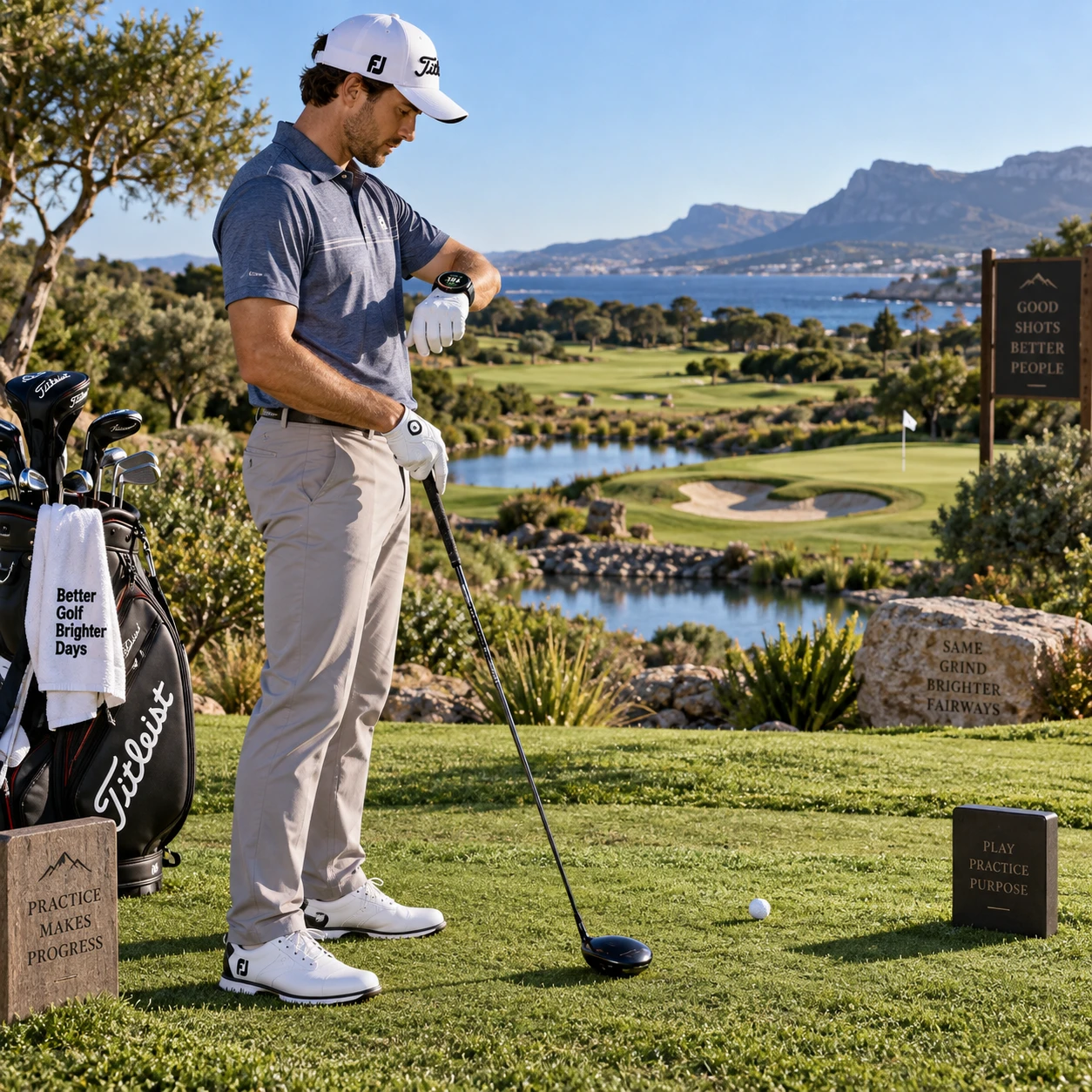
Wearable GPS technology gives golfers practical distance information during rounds and practice sessions. A GPS watch or other wearable can show distances to greens and hazards, helping players connect their choices on the course with more purposeful training afterward.
The value is not in collecting the most data. It comes from using a few reliable measurements to understand what happens on the course, identify a practice priority, and check whether a change is helping. Features vary by device, and GPS readings work best alongside sound judgment and feedback on technique.
From on-course distances to focused practice
Wearable golf GPS devices make practice more purposeful by showing how far golfers are from key targets and helping them rehearse real course decisions. Distance context turns a range session or on-course practice into a chance to work on specific shots.
For example, a golfer who often faces a 140-yard approach can use that distance as a practice reference. Rather than hitting a random selection of clubs, they can work on an appropriate target with the club they would realistically consider. On the course, a GPS watch can display distances to the front, middle, and back of the green, depending on the model and course mapping.
This information also helps golfers recreate situations from recent rounds. If a player repeatedly leaves approach shots short, they can review whether they chose a club for the middle of the green, misjudged the target, or struck the ball poorly. The GPS does not diagnose the swing, but it can make the question more specific.
Keep a simple practice note: target distance, club, intended shot, and result. A few sessions of consistent notes are often more useful than trying to remember every shot. The goal is to practise decisions and distances that matter to your game, not to turn every session into a data project.
The training insights wearables can provide
Wearable golf GPS devices can provide distance information, and some models also support shot tracking, club-use records, or performance summaries. The available insights depend on the device, whether shots are entered manually or detected automatically, and how consistently the golfer uses it.
A basic GPS watch may focus on yardages and course maps. More advanced systems may let golfers record shots, associate them with clubs, or review patterns across rounds. These records can help answer practical questions: Which clubs appear most often? How far does a player typically hit a club in real playing conditions? Are missed approaches tending to come up short, or do they finish beyond the target?
Club distances deserve particular care. A recorded average can be misleading if it combines different lies, wind conditions, and strike quality. One unusually long shot can also pull the average upward. For a more useful picture, track several normal shots and note the typical carry or finish range, rather than treating one number as a guarantee.
- Shot tracking: Can create a record of shot locations and outcomes when the device or companion system supports it.
- Club use: May reveal which clubs golfers rely on and where they lack a comfortable option.
- Performance patterns: Can highlight recurring situations, such as approach distances or frequent trouble areas.
Some data requires extra steps, such as tagging clubs or confirming shots after a round. That can improve detail, but it also takes time. Choose a level of tracking you will actually maintain.
Better decisions through course management
GPS distance information supports course management by showing how far golfers are from greens, hazards, and other mapped points. With a clearer picture of the hole, players can plan a shot that suits their abilities and the risks ahead.
A yardage to the middle of the green can guide a straightforward approach, while front and back distances help golfers judge the target’s depth. Distances to bunkers, water, or the edge of a fairway can also inform a tee-shot decision. If a hazard sits within range of a player’s usual shot, a shorter club or a different target may be the more sensible choice.
Think of course management as a sequence: identify the target, check the relevant distances, choose a club based on your own typical performance, then commit to the shot. A GPS watch can make the first two steps easier. It cannot account perfectly for every factor, including wind, elevation, lie, temperature, or the golfer’s current contact.
For training, note when a decision helped or hurt. A golfer may discover that a conservative lay-up leaves a familiar wedge distance, while an aggressive line brings a hazard into play. Over time, those observations can shape a repeatable strategy rather than a string of guesses.
Choosing a wearable for golf training
The right wearable for golf training is the one that provides useful distances and fits comfortably into your routine. Compare display readability, ease of use, battery life, fit, course coverage, and the level of shot tracking you need.
Display and controls matter because you will often check a device between shots, in bright sunlight, or while walking. A clear screen and simple navigation reduce delays. Some watches offer touchscreens; others rely on buttons, which can be easier to use with wet hands or gloves.
Comfort and fit affect whether the watch stays on your wrist for a full round and practice session. Try to choose a band that feels secure without restricting movement. If you dislike wearing a watch while swinging, consider whether another compatible wearable format suits you better.
Battery life should cover the rounds and practice sessions you normally play, with some allowance for frequent screen use and tracking features. GPS use can drain a battery faster than basic timekeeping. Check how the manufacturer describes battery life in GPS mode, not only in standby.
GPS rangefinders are another way to get distance information, though they are typically handheld rather than wrist-worn. A GPS watch offers quick access and convenience; a rangefinder may suit golfers who prefer a dedicated device or a different way to check yardages. Compare the actual features you will use, including hazard distances, green details, shot tracking, and course updates, rather than choosing by feature count alone.
Turning device data into useful habits
To turn wearable GPS data into useful habits, review it regularly, look for one recurring pattern, and set a specific practice goal. Small, repeatable adjustments are easier to evaluate than broad goals such as “get better at irons.”
After a round, spend five minutes noting a few situations: an approach distance that felt uncertain, a club choice that worked, or a hazard that influenced your plan. If your device supports shot tracking, review the record for a pattern you can act on. Avoid drawing conclusions from a single round, since course conditions and the number of opportunities can vary.
Then choose one practice task for the next session. For instance, if you often face approaches around 120 to 150 yards, practise a small set of target distances in that range and record whether your shots finish short, long, or near the intended area. Keep the goal specific and realistic, such as improving distance control on a familiar club rather than expecting every shot to land beside the pin.
A useful review loop is observe, choose, practise, and reassess. The device supplies observations; the golfer decides what matters. If the pattern does not repeat over several sessions, it may not deserve a major change in your training plan.
Limitations to keep in mind
Wearable GPS devices are useful tools, but they do not replace technique, coaching, or on-course judgment. Readings and tracking can vary, and the device may not account for every condition that affects a shot.
Course maps can be incomplete or out of date, and GPS signals may be less dependable in some settings. A displayed yardage is a reference to a mapped point, not a complete recommendation for club choice. Wind, slope, temperature, the lie, and the player’s strike all matter. If a distance looks inconsistent with what you see, pause and use your judgment.
Tracking also has limits. Automatic shot detection may miss or misclassify shots, while manual tracking depends on careful input. A club’s recorded distance can change with the conditions and the golfer’s contact. Treat performance data as a guide to patterns, not proof that a particular club always travels one exact distance.
- Mistake: trusting one number as exact. Yardages refer to mapped points and may not reflect every course condition. Check the target and adjust for the shot in front of you.
- Mistake: changing clubs based on one recorded shot. One result can be unusual. Look for a consistent pattern across several rounds or practice sessions.
- Mistake: tracking everything without a question. A large data log can become a chore. Choose one issue to investigate and record only what helps answer it.
Used with care, wearable GPS technology can help golfers connect on-course choices with focused practice. Its best contribution is a clearer picture of distances, decisions, and recurring situations, leaving the player to apply that information with patience and judgment.