The Evolution of Golf Technology: From Yardage Books to GPS Devices
Golf has always rewarded preparation. Knowing your distances, reading the terrain, and making smart club selections separates a confident round from a frustrating one. But the tools golfers use to gather that information have changed dramatically over the past century. What started with hand-drawn maps and caddies counting steps has evolved into satellite-powered devices that fit on your wrist. Here's how that journey unfolded — and why it matters for anyone playing the game today.
How Golfers Navigated Courses Before Technology
Before any printed guides or electronic devices existed, golfers relied almost entirely on experience, memory, and the knowledge of their caddies. The original navigation tools were human: a seasoned looper who knew every slope, hidden bunker, and wind pattern on a course was worth more than any chart.
Pacing off distances was standard practice. A golfer or caddie would walk from a known landmark — a sprinkler head, a fairway marker, a tree — and count steps to the target. Over time, players built mental maps of their home courses, but on unfamiliar layouts, they were largely guessing. Club selection often came down to instinct rather than data.
This approach had a certain elegance to it. Reading the course with your eyes and feet built a deep connection to the game. The trade-off was obvious, though: inconsistency, slow play, and a steep learning curve on any course you hadn't played dozens of times before.
The Rise of Printed Yardage Books and Course Guides
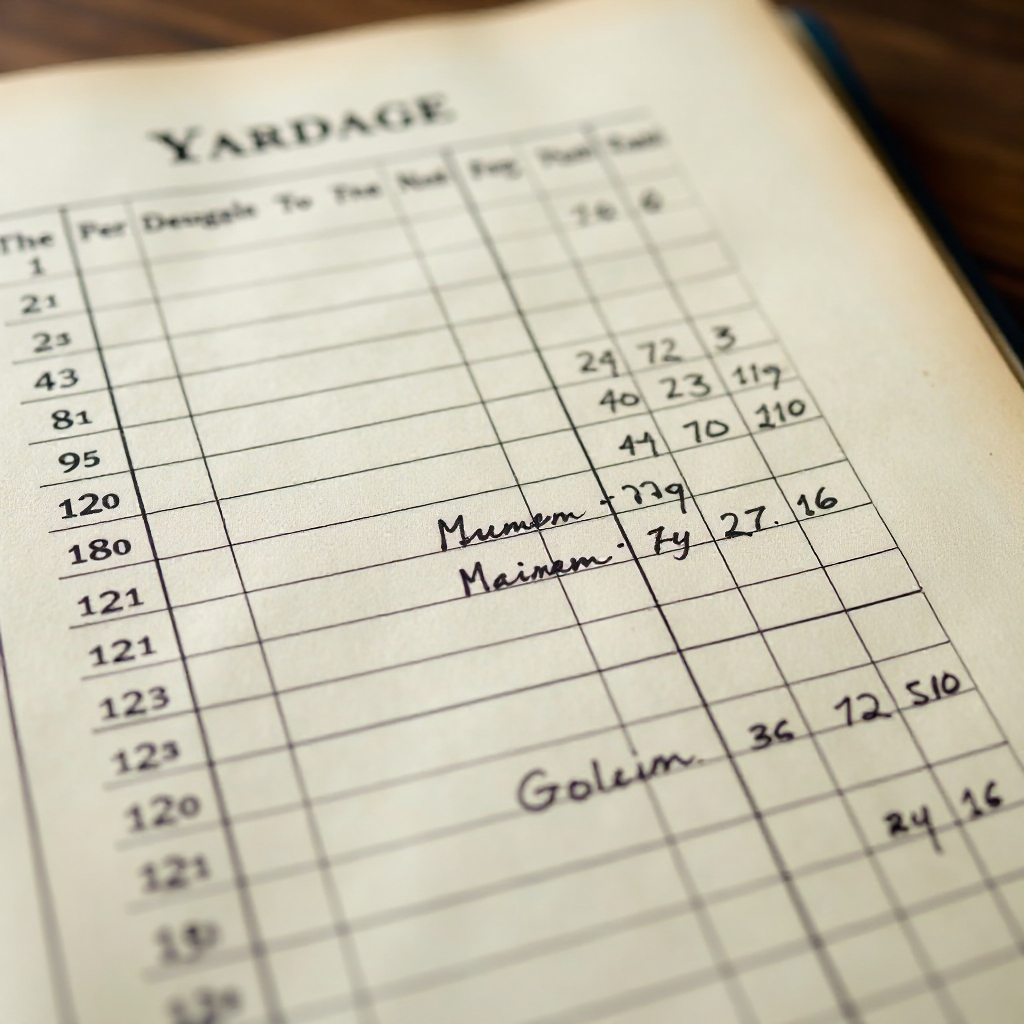
Yardage books became a standard part of professional golf by the 1970s and 1980s, giving players a compact, hole-by-hole reference for distances, hazards, and green contours. These small spiral-bound guides were (and still are) hand-measured by specialists who walk every inch of a course with measuring wheels.
For amateur golfers, printed course guides and scorecards with basic yardage markers became widely available. Colored markers on fairways — typically red (100 yards), white (150 yards), and blue (200 yards) — gave recreational players a reliable reference without needing to carry a book.
At the professional level, yardage books never really went away. Tour caddies still annotate them obsessively, adding notes about pin positions, green slopes in tenths of a degree, and how the ball will react on firm versus soft turf. That level of detail remains difficult to replicate digitally. For everyday golfers, though, printed guides had clear limitations: they required updating when courses changed, offered no real-time feedback, and still demanded mental math on every shot.
Laser Rangefinders Enter the Game
Laser rangefinders gave golfers something yardage books couldn't: an instant, precise measurement to any target they could see. By pointing the device at a flagstick and pressing a button, a golfer could get a distance reading accurate to within a yard — no pacing, no mental arithmetic required.
When handheld laser devices became commercially available to golfers in the 1990s and early 2000s, they were immediately popular among serious amateurs. The accuracy was hard to argue with. A laser reading to the pin is typically within ±1 yard, which is genuinely useful when you're deciding between a 7-iron and an 8-iron.
The limitations were real, though. Lasers require a clear line of sight — they struggle in fog, heavy rain, or when the flagstick is obscured by trees. They also only measure point-to-point distance, offering no information about hazard locations, layup yardages, or carry distances over water. And using one mid-round takes time: you raise the device, locate the target, steady your hand, and wait for the reading. On a busy course, that adds up.
Slope measurement features, which calculate elevation-adjusted distances, added genuine value for hilly courses — but the USGA prohibited slope-enabled devices in competition, creating a category split that persists today.
GPS Technology Changes Everything
GPS golf devices changed the fundamental nature of course navigation by giving golfers a complete aerial view of every hole before they even addressed the ball. Rather than measuring to a single point, GPS technology displays distances to the front, center, and back of the green simultaneously — along with hazard carry distances, layup zones, and dogleg information.
The first dedicated GPS golf units appeared in the early 2000s and were bulky, expensive, and required downloading course maps before each round. Even so, the concept was transformative. Recreational golfers suddenly had access to the kind of course intelligence that previously required a caddie or years of local knowledge.
As satellite accuracy improved and course mapping databases expanded, GPS devices became faster, smaller, and more reliable. Digital course maps now cover tens of thousands of courses worldwide, updated regularly to reflect course changes. A golfer arriving at an unfamiliar track in another state — or another country — can pull up accurate hole layouts within seconds.
The practical impact on pace of play is significant. Instead of spending 30 seconds ranging a shot with a laser, a GPS device displays the relevant distances the moment you walk into range. For recreational golfers, that speed and simplicity is often more valuable than the fractional accuracy advantage a laser might offer.
Modern GPS Devices: Watches, Handhelds, and App Integration
Today's GPS golf technology comes in three main forms: dedicated handheld devices, smartwatches for golf, and smartphone apps. Each serves slightly different needs, but all share the same core capability — real-time course mapping with distance data.
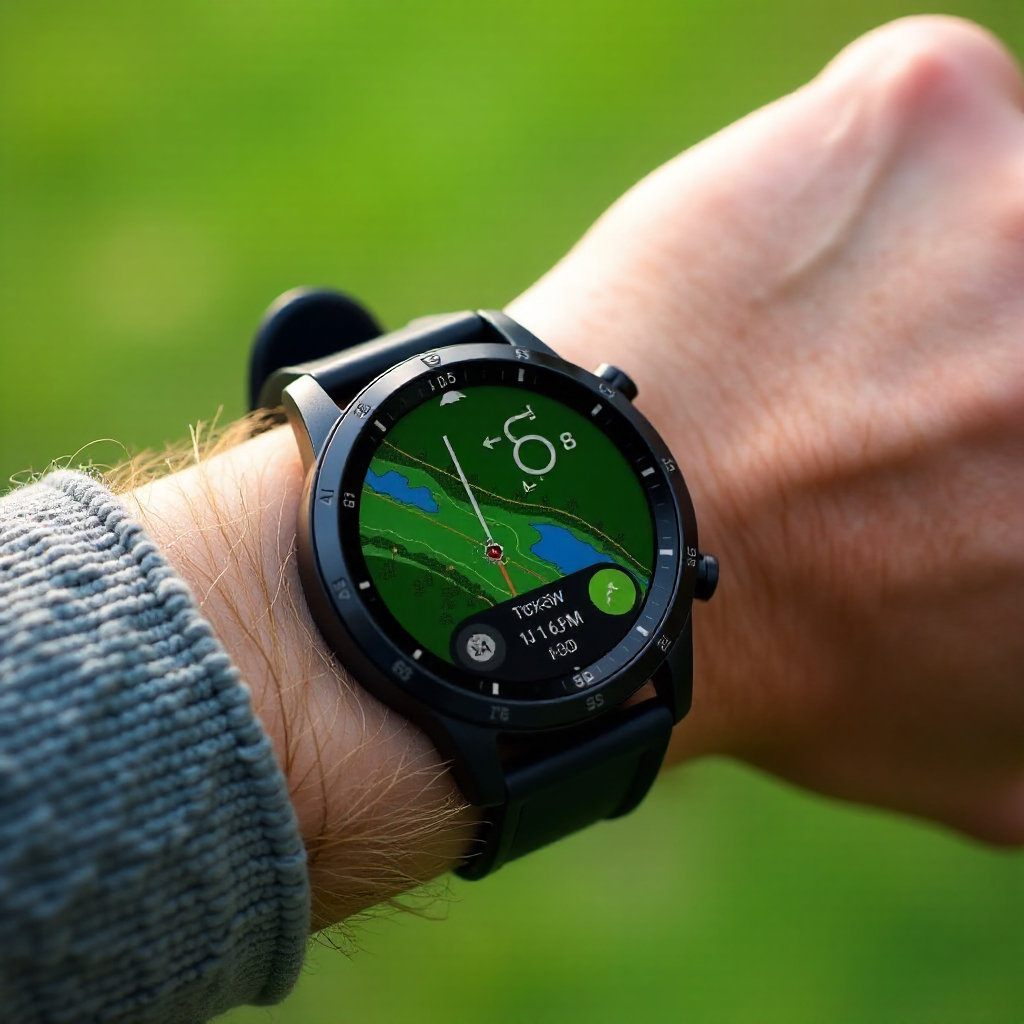
Golf GPS watches have become particularly popular because they eliminate the need to pull a device from your pocket. A quick glance at your wrist gives you front, center, and back distances, hazard information, and sometimes even green shape overlays. Many golfers who already wear a fitness tracker have migrated to a golf-capable smartwatch that handles both functions.
Handheld GPS units still have a loyal following, especially among golfers who prefer a larger screen with more detail. Some models include shot tracking features that record where each shot lands, giving players a statistical picture of their game over time. That data can reveal patterns — a tendency to miss approach shots short-right, for example — that are genuinely useful for improvement.
Smartphone apps have democratized access to GPS golf technology. Several well-regarded apps offer free or low-cost access to course maps, basic yardage data, and handicap and scoring apps that sync with official handicap systems. The trade-off is battery drain and the inconvenience of pulling out a phone mid-round, but for casual players, the cost-to-value ratio is hard to beat.
Rules, Regulations, and Competitive Use
The USGA rules on distance-measuring devices have evolved alongside the technology itself. For most of golf's history, any device that measured distance was prohibited in competition unless the committee specifically allowed it. That changed significantly in 2019, when the USGA and R&A revised the Rules of Golf to permit distance-measuring devices by default in all forms of play — unless a committee chooses to prohibit them via a local rule.
The key restriction that remains is slope measurement. Devices or apps that factor in elevation changes to produce an adjusted "plays like" distance are still prohibited in competition unless the committee explicitly permits them. Most GPS devices and laser rangefinders with slope capability include a toggle that disables the feature for tournament play.
For recreational rounds, there are no restrictions at all. Golfers can use any device they like, including slope-adjusted GPS, without concern. At the professional level, the tour organizations set their own policies — the PGA Tour permits rangefinders in pro-am rounds but not in official competition rounds.
Understanding these distinctions matters if you play in club competitions, member-guest events, or any organized tournament. When in doubt, check whether the local rules sheet includes a permission or prohibition on distance-measuring devices before your round.
Why GPS Has Become the Standard for Today's Golfer
GPS technology has become the dominant navigation tool for recreational golfers because it combines accuracy, convenience, and comprehensive information in a single, always-available package. You don't need to aim at anything, wait for a reading, or do math — the relevant distances are simply there when you need them.
The accessibility factor matters enormously. A golfer who plays twice a month on different courses gets immediate, reliable data on every hole without prior preparation. That confidence in club selection — knowing you have 157 yards to carry the bunker, not roughly 150 — directly affects decision-making and enjoyment.
GPS devices also support the broader ecosystem of modern golf improvement. Shot tracking, scoring integration, and round analytics give players a data-driven view of their game that was previously available only to tour professionals with full-time coaches. A weekend golfer can now review which clubs they hit most accurately, how often they reach greens in regulation, and where strokes are being lost.
Yardage books still have a place — particularly at the elite amateur and professional level, where green-reading detail and annotated course knowledge remain irreplaceable. Laser rangefinders remain valuable for their pin-point accuracy in clear conditions. But for the vast majority of golfers playing recreational rounds, GPS technology offers the most practical, immediate, and complete picture of the course in front of them.
Frequently Asked Questions
What is the difference between a GPS golf device and a laser rangefinder?
A GPS golf device uses satellite data and pre-loaded course maps to show distances to greens, hazards, and layup points across the entire hole. A laser rangefinder measures the precise distance to a specific target you aim at. GPS is faster and shows more information at once; lasers are generally more accurate to a specific point, especially to the flagstick.
Are GPS golf devices allowed in tournament play?
Yes, in most cases. Since the 2019 Rules of Golf update, distance-measuring devices are permitted by default unless a local rule prohibits them. However, slope-adjusted distance features remain prohibited in competition. Always check the local rules for your specific event.
Do GPS golf watches require a subscription or course downloads?
It depends on the device. Some GPS golf watches include free lifetime course access with no subscription required. Others offer a base level of free courses with premium maps or features behind a subscription. Most modern devices download course maps automatically via Wi-Fi or Bluetooth, so manual downloads are rarely necessary.
How accurate are GPS golf devices compared to yardage books?
GPS devices are typically accurate to within 3-5 yards for green distances, which is sufficient for club selection in the vast majority of situations. Professionally measured yardage books can be more precise for specific pin positions and green contours, which is why tour caddies still carry them. For recreational play, GPS accuracy is more than adequate.
What features should I look for in a GPS golf device?
Prioritize course coverage (how many courses are pre-loaded and how often they're updated), display clarity in sunlight, battery life for a full round, and ease of use. Shot tracking and scoring features add value if you want to analyze your game over time. For watches specifically, comfort and whether it doubles as a fitness tracker may influence your choice.